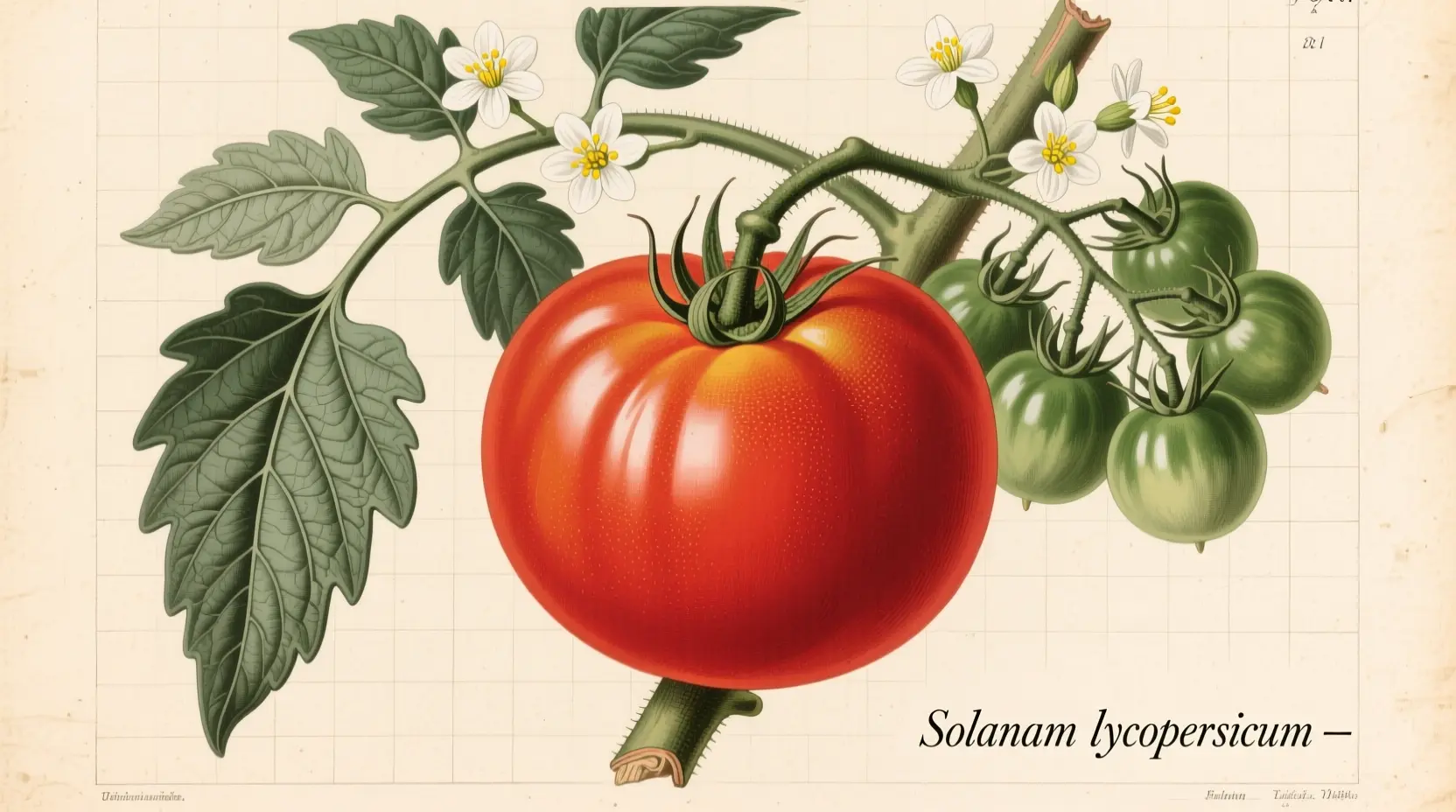
Have you ever picked up a tomato from your kitchen and wondered, “What is the scientific name for tomato?” I remember the first time this question crossed my mind. I was standing in the kitchen, slicing tomatoes for a simple meal, when I suddenly realized that I had no idea what tomatoes are called in scientific terms. That small moment of curiosity pushed me to look deeper.
In this article, I’m talking directly to you and sharing what I discovered explained in clear, simple words.
By the end, you’ll not only know the scientific name for tomato, but you’ll also understand why scientists use these names and how tomatoes fit into the world of plant biology.
🍅Primary Scientific Name of Tomato
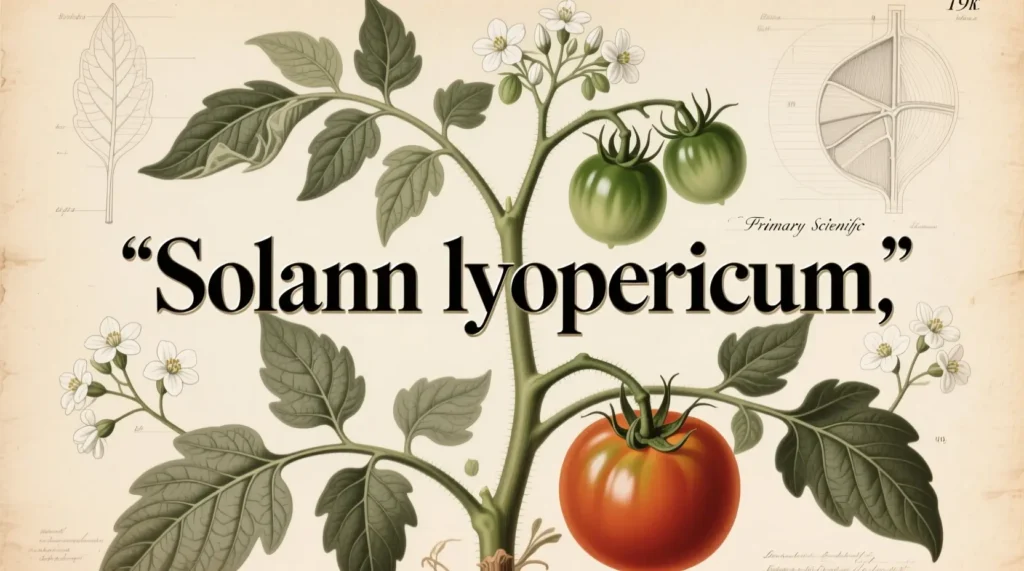
The main and most correct scientific name for tomato is accepted worldwide. This is the name you’ll see in textbooks, plant nurseries, and research papers.
1. Solanum lycopersicum
Meaning: The modern official scientific name for the tomato plant.
2. Solanum lycopersicum L.
Meaning: The “L.” stands for Linnaeus, the scientist who classified it.
3. Solanum lycopersicum var. cerasiforme
Meaning: Scientific name for cherry tomato types.
4. Solanum lycopersicum var. lycopersicum
Meaning: The most common cultivated tomato variety.
5. Solanum lycopersicum subsp. humboldtii
Meaning: A natural subgroup of tomato species.
6. Solanum lycopersicum var. commune
Meaning: Another classification for everyday domestic tomatoes.
7. Solanum lycopersicum var. minor
Meaning: Smaller fruit type in the species.
8. Solanum lycopersicum var. pyriforme
Meaning: The scientific name for pear-shaped tomatoes.
9. Solanum lycopersicum var. validum
Meaning: A variety known for firm growth structure.
10. Solanum lycopersicum var. grandifolium
Meaning: Tomato type with large leaves.
🌿Older (Historic) Scientific Names of Tomato
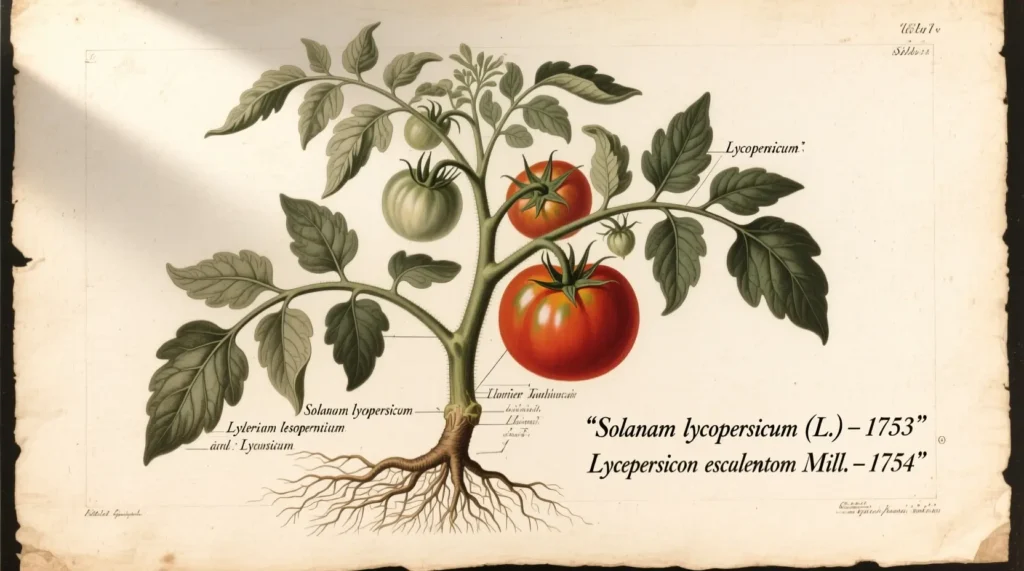
These names were once used by botanists before the modern classification system changed. Good for research, history, and academic work.
1. Lycopersicon esculentum
Meaning: Old but widely recognized name meaning “wolf-peach.”
2. Lycopersicon esculentum Mill.
Meaning: Classified earlier by botanist Miller.
3. Lycopersicon lycopersicum
Meaning: A repeated naming attempt from early taxonomy.
4. Lycopersicon cerasiforme
Meaning: Older name for cherry tomatoes.
5. Lycopersicon pimpinellifolium (linked earlier)
Meaning: Wild ancestor of modern tomatoes.
6. Lycopersicon validum
Meaning: Name used before reclassification.
7. Lycopersicon grandifolium
Meaning: Tomato with large leaves.
8. Lycopersicon minor
Meaning: Earlier name for smaller fruit types.
9. Lycopersicon commune
Meaning: Older name for common tomatoes.
10. Lycopersicon humboldtii
Meaning: Historic botanical label.
🌍 Wild Tomato Scientific Names
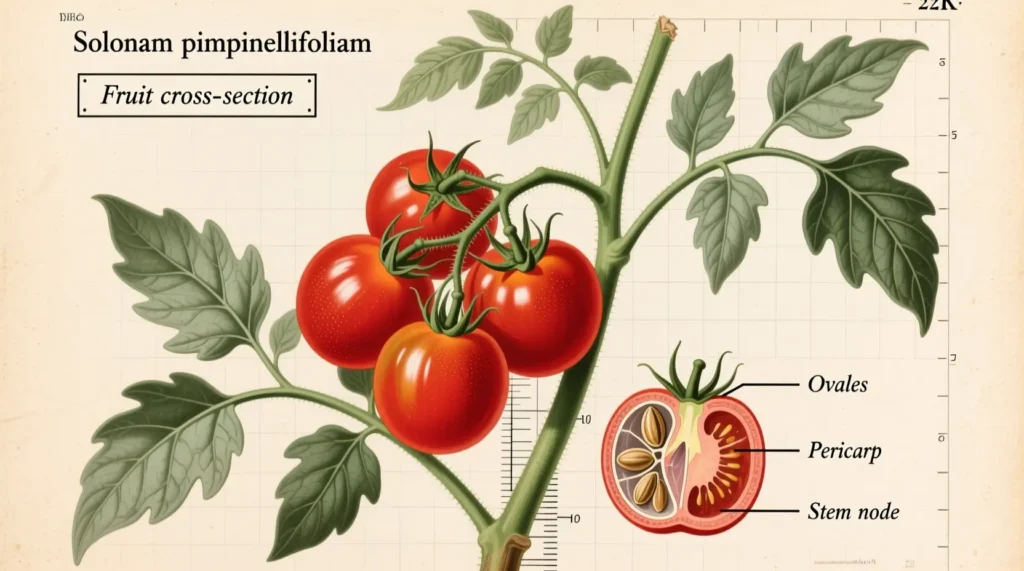
These belong to tomato species that grow in the wild. Many are found in Peru, Ecuador, Chile, and nearby regions.
1. Solanum pimpinellifolium
Meaning: Wild red currant tomato.
2. Solanum peruvianum
Meaning: Wild tomato found in Peru.
3. Solanum chilense
Meaning: Drought-resistant wild tomato.
4. Solanum pennellii
Meaning: Tomato species used for hybrid studies.
5. Solanum habrochaites
Meaning: Hairy wild tomato.
6. Solanum cheesmaniae
Meaning: A wild species from the Galápagos.
7. Solanum galapagense
Meaning: Tomato species native to Galápagos Islands.
8. Solanum arcanum
Meaning: A wild tomato found in Andean regions.
9. Solanum corneliomulleri
Meaning: Wild species grouped with pimpinellifolium complexes.
10. Solanum neorickii
Meaning: Wild tomato named after a botanist (R.E. Rick).
🧬Hybrid & Research Tomato Scientific Names

These names appear in labs, breeding programs, and scientific papers.
1. Solanum lycopersicum × Solanum pimpinellifolium
Meaning: A hybrid between common and currant tomatoes.
2. Solanum lycopersicum × Solanum pennellii
Meaning: Used for drought-resistance studies.
3. Solanum lycopersicum × Solanum peruvianum
Meaning: Hybrid for disease-tolerance research.
4. Solanum lycopersicum × Solanum habrochaites
Meaning: Bred for pest resistance.
5. Solanum lycopersicum cv. Moneymaker
Meaning: Hybrid/cultivar used in research.
6. Solanum lycopersicum cv. Roma VF
Meaning: Classic hybrid tomato variety.
7. Solanum lycopersicum cv. Better Boy
Meaning: Research-friendly cultivar.
8. Solanum lycopersicum cv. Heinz 1706
Meaning: Tomato genome reference variety.
9. Solanum lycopersicum cv. Ailsa Craig
Meaning: Used in plant growth experiments.
10. Solanum lycopersicum cv. San Marzano
Meaning: Famous Italian cultivar.
🍅Scientific Names for Tomato Varieties (Botanical Variants)
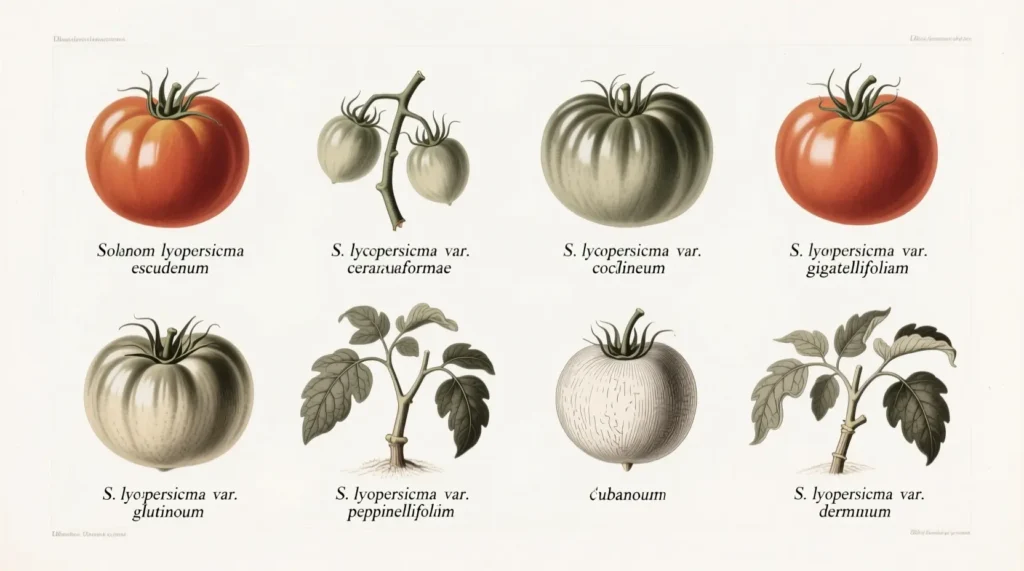
These are names assigned to physical variations in shape, size, and structure.
1. Solanum lycopersicum var. cerasiforme
Meaning: Cherry tomato form.
2. Solanum lycopersicum var. pyriforme
Meaning: Pear-shaped fruit.
3. Solanum lycopersicum var. validum
Meaning: Firm, strong plant structure.
4. Solanum lycopersicum var. humboldtii
Meaning: Variation found near Humboldt region.
5. Solanum lycopersicum var. racemigerum
Meaning: Tomato with long fruit clusters.
6. Solanum lycopersicum var. grandifolium
Meaning: Big-leaf variation.
7. Solanum lycopersicum var. minor
Meaning: Small-fruit variant.
8. Solanum lycopersicum var. commune
Meaning: Standard household tomato.
9. Solanum lycopersicum var. typicum
Meaning: Typical tomato variety.
10. Solanum lycopersicum var. multiflorum
Meaning: Many-flower type.
🌱Tomato Plant Part Scientific Names
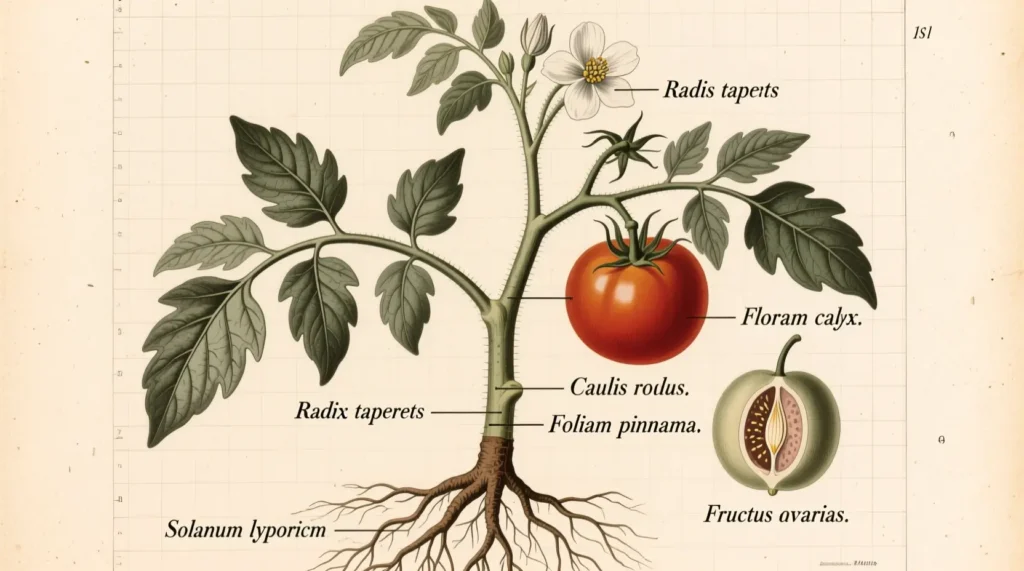
Researchers also use botanical names for tomato stems, roots, flowers, and tissues.
1. Solanum lycopersicum flos
Meaning: Tomato flower.
2. Solanum lycopersicum fructus
Meaning: Tomato fruit.
3. Solanum lycopersicum folium
Meaning: Tomato leaf.
4. Solanum lycopersicum radix
Meaning: Tomato root.
5. Solanum lycopersicum semen
Meaning: Tomato seed.
6. Solanum lycopersicum cortex
Meaning: Stem surface layer.
7. Solanum lycopersicum bulbus
Meaning: Root bulb structure.
8. Solanum lycopersicum pedunculus
Meaning: Fruit stalk.
9. Solanum lycopersicum calyx
Meaning: Green crown around the fruit.
10. Solanum lycopersicum pericarp
Meaning: Fruit wall.
🍃Tomato Disease-Related Scientific Names
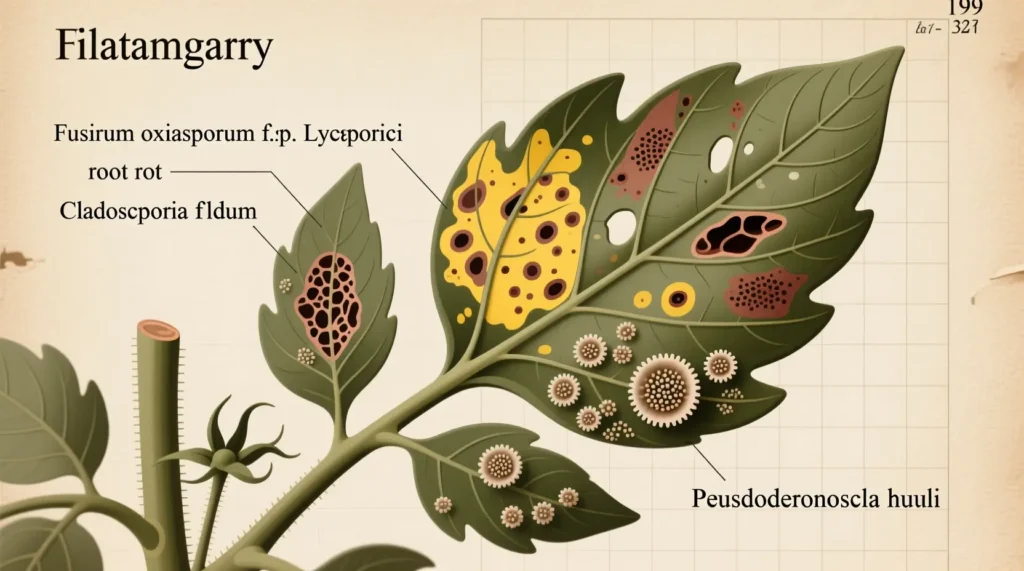
These scientific names appear in pathology studies connected to tomato diseases.
1. Solanum lycopersicum virus 1 host
Meaning: Host name for viral studies.
2. Solanum lycopersicum mosaic host
Meaning: Host for mosaic-virus research.
3. Solanum lycopersicum wilt-pathway reference
Meaning: Used in wilt testing.
4. Solanum lycopersicum nematode-response host
Meaning: Used for soil pest studies.
5. Solanum lycopersicum fungal-response host
Meaning: Seen in fungal research.
6. Solanum lycopersicum TYLCV host
Meaning: Tomato yellow leaf curl virus host.
7. Solanum lycopersicum mildew-marker plant
Meaning: Used for mildew study.
8. Solanum lycopersicum pest-resistance class
Meaning: Classification for pest tests.
9. Solanum lycopersicum pathogen-interaction plant
Meaning: Scientific modeling term.
10. Solanum lycopersicum stress-marker plant
Meaning: Used in stress-pattern studies.
🌾Regional or Cultural Scientific Tomato Classifications
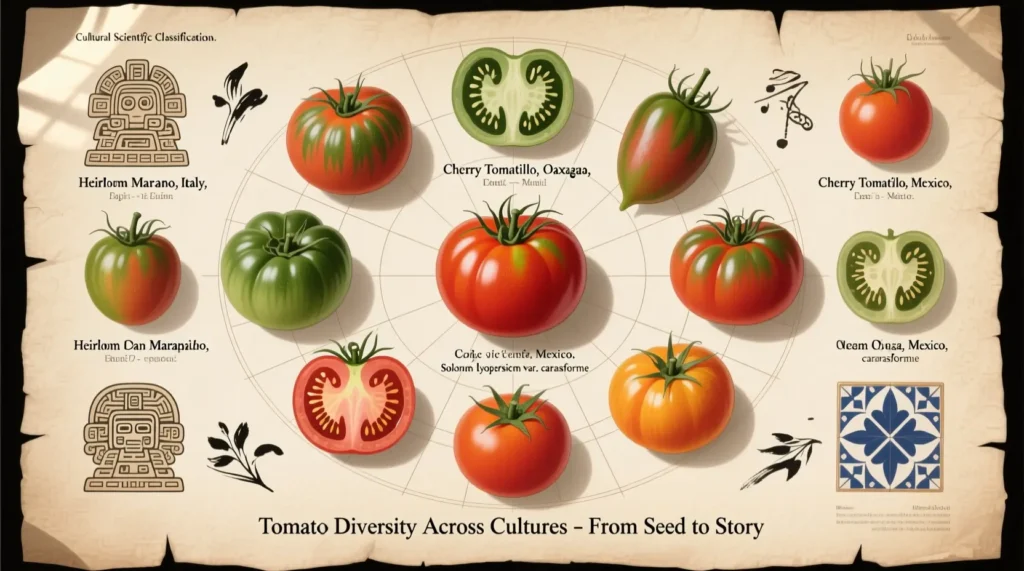
Some regions use special scientific labels for local tomato species.
1. Solanum lycopersicum var. japonicum
Meaning: Japanese variation.
2. Solanum lycopersicum var. indicum
Meaning: Indian-origin classification.
3. Solanum lycopersicum var. americanum
Meaning: Used in U.S. botanical references.
4. Solanum lycopersicum var. europaeum
Meaning: European variation grouping.
5. Solanum lycopersicum var. mediterraneum
Meaning: Mediterranean tomato variant.
6. Solanum lycopersicum var. andinum
Meaning: Andean-region tomato.
7. Solanum lycopersicum var. mexicanum
Meaning: Mexican-origin label.
8. Solanum lycopersicum var. africanum
Meaning: African botanical grouping.
9. Solanum lycopersicum var. australium
Meaning: Australian botanical classification.
10. Solanum lycopersicum var. sinense
Meaning: Chinese regional category.
🌋Scientific Names for Tomato Relatives
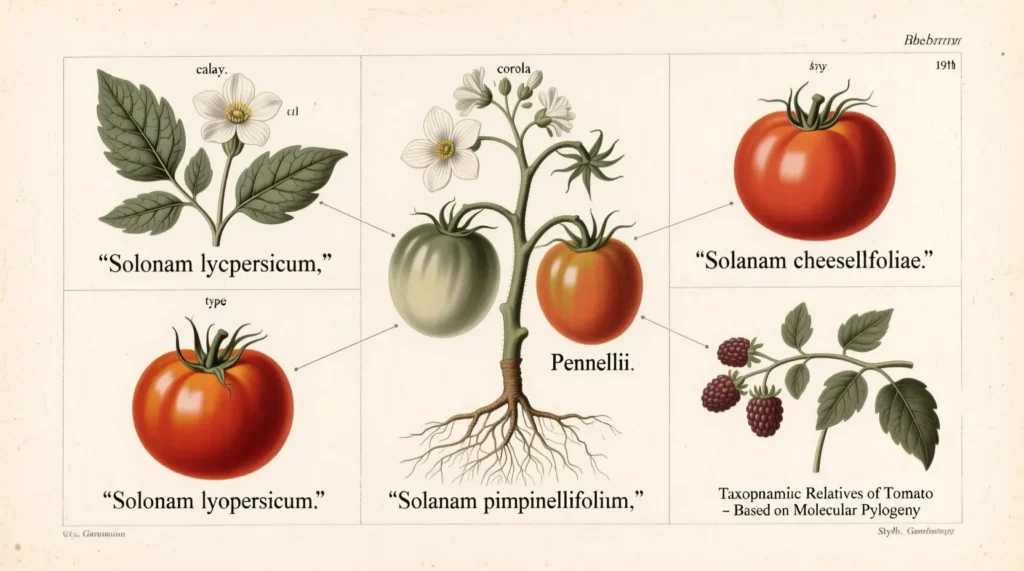
These are close cousins of the tomato species.
1. Solanum melongena
Meaning: Eggplant; tomato relative.
2. Solanum tuberosum
Meaning: Potato; close family member.
3. Solanum muricatum
Meaning: Pepino melon; tomato cousin.
4. Solanum quitoense
Meaning: Naranjilla plant.
5. Solanum betaceum
Meaning: Tree tomato (tamarillo).
6. Solanum aethiopicum
Meaning: Scarlet eggplant.
7. Solanum macrocarpon
Meaning: African eggplant.
8. Solanum sisymbriifolium
Meaning: Sticky nightshade.
9. Solanum caripense
Meaning: Wild nightshade relative.
10. Solanum aviculare
Meaning: Kangaroo apple plant.
🔬Tomato Genetic Line Scientific Names
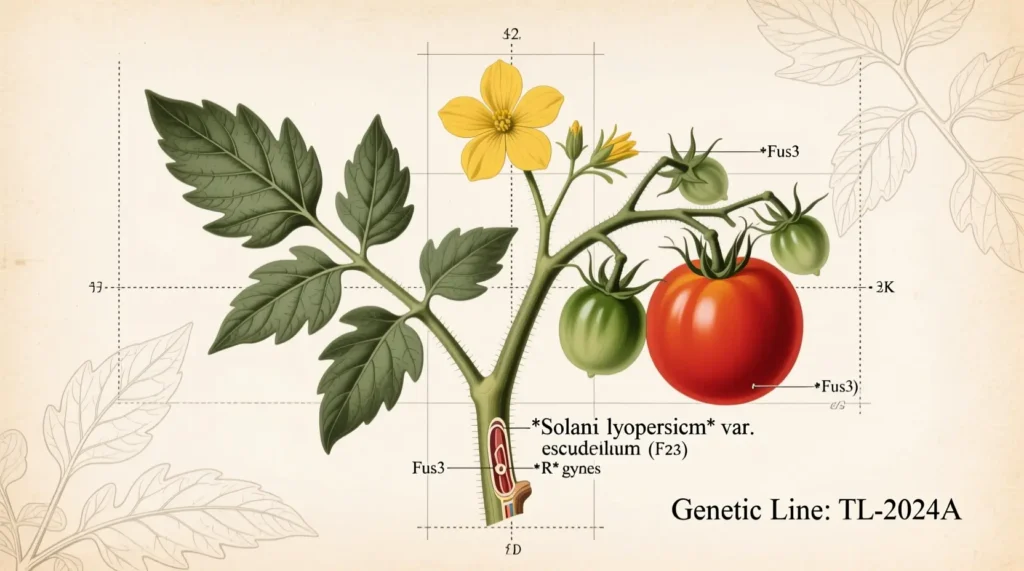
Used in lab DNA studies.
1. Solanum lycopersicum LA0716
Meaning: Genetic research line.
2. Solanum lycopersicum LA2847
Meaning: Marker line for breeding.
3. Solanum lycopersicum LA4024
Meaning: Used in genome mapping.
4. Solanum lycopersicum LA3570
Meaning: Stress-tolerance line.
5. Solanum lycopersicum LA1689
Meaning: Drought-resistance DNA sample.
6. Solanum lycopersicum LA2706
Meaning: Mutation-research tomato.
7. Solanum lycopersicum LA1301
Meaning: USDA gene bank accession.
8. Solanum lycopersicum LA1675
Meaning: Wild-like genetic line.
9. Solanum lycopersicum LA3860
Meaning: Improved breeding sample.
10. Solanum lycopersicum LA4345
Meaning: Flavor and aroma research line.
Conclusion
Tomatoes may look simple, but their scientific world is huge and exciting! From the main botanical name Solanum lycopersicum to wild species, hybrids, older historic names, and research-grade classifications, every name tells a story.
Whether you’re a student, gardener, or plant lover, these 155+ scientific names give you a solid base to study, compare, and explore tomatoes in a deeper and more engaging way.
Pick your favorite scientific name and dive into the amazing world of tomato science!

Charles Dickens is a professional content writer at Namemeeaning.com, specializing in clear, research-based articles about names, meanings, and cultural origins. With strong SEO expertise and a passion for language, he creates simple, helpful, and engaging content for readers worldwide.